

 Image 1 of 1
Garbi is an upholstered seating collection conceived as a flexible system for residential and contract environments.
The project is structured around a circular base that supports soft, continuous volumes, creating a calm and understated presence. The swivel function and range of finishes allow the piece to adapt to different contexts, while maintaining a unified and essential expression.
The name refers to Mount Garbí in Valencia, the designer’s hometown, and to its character as a familiar and approachable landscape. Rather than a literal reference, the project draws on this idea of a soft, continuous topography, where transitions are fluid and volumes unfold without sharp edges. This approach translates into a restrained geometry and a precise development of the upholstery—visible in junctions, seams, and edges—which plays a central role in the prototyping process.
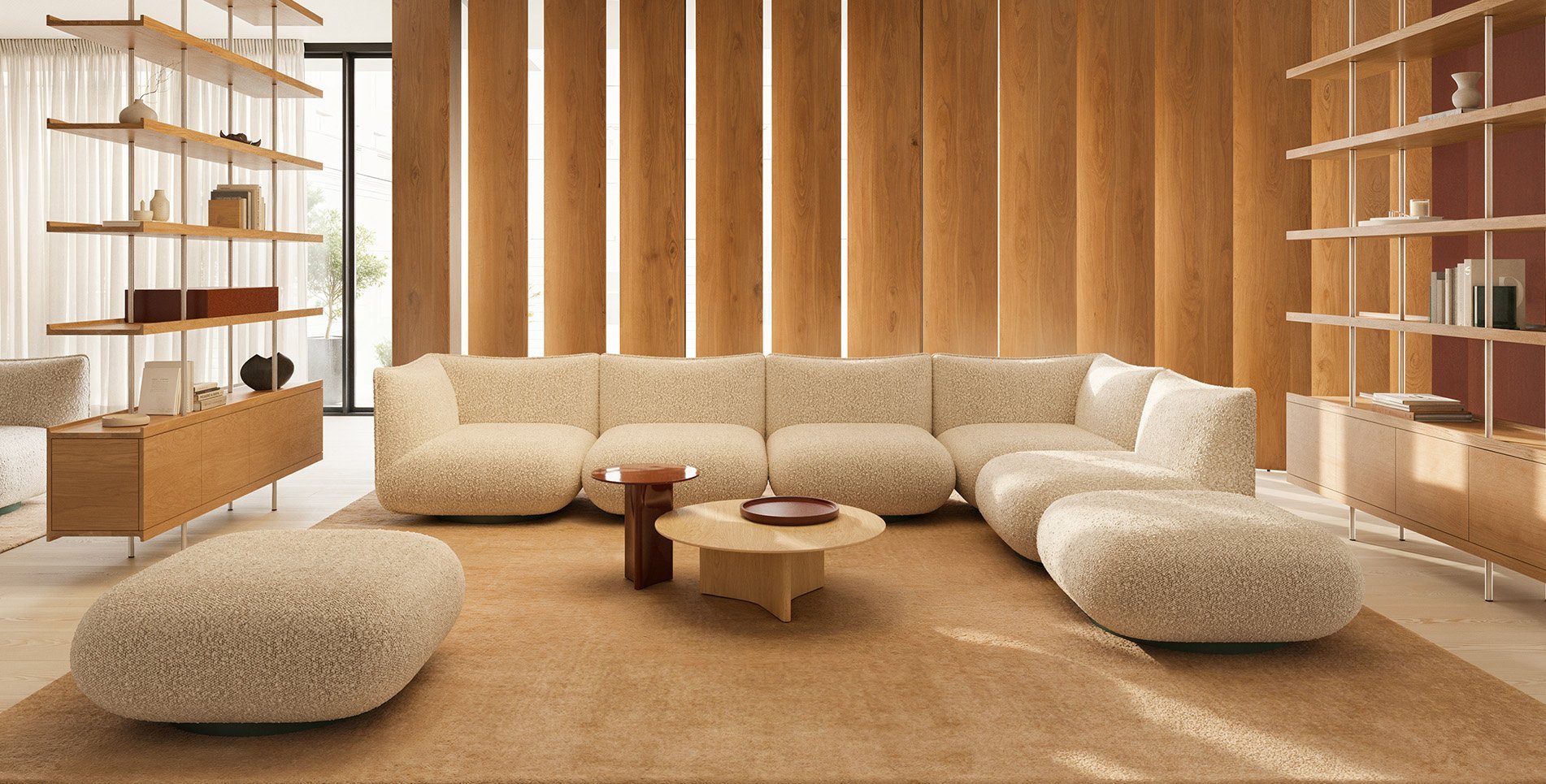
The system is conceived both as a standalone piece and in larger configurations, where the repetition of modules creates open compositions capable of structuring space without dominating it.
Garbi proposes a balanced relationship between comfort and formal clarity, with a transversal vocation that allows it to function equally well in residential and contract settings, responding to different scenarios through a consistent constructive logic.
Garbi is an upholstered seating collection conceived as a flexible system for residential and contract environments.
The project is structured around a circular base that supports soft, continuous volumes, creating a calm and understated presence. The swivel function and range of finishes allow the piece to adapt to different contexts, while maintaining a unified and essential expression.
The name refers to Mount Garbí in Valencia, the designer’s hometown, and to its character as a familiar and approachable landscape. Rather than a literal reference, the project draws on this idea of a soft, continuous topography, where transitions are fluid and volumes unfold without sharp edges. This approach translates into a restrained geometry and a precise development of the upholstery—visible in junctions, seams, and edges—which plays a central role in the prototyping process.
The system is conceived both as a standalone piece and in larger configurations, where the repetition of modules creates open compositions capable of structuring space without dominating it.
Garbi proposes a balanced relationship between comfort and formal clarity, with a transversal vocation that allows it to function equally well in residential and contract settings, responding to different scenarios through a consistent constructive logic.